


 Vitamin B for dogs is a collective term for eight water-soluble vitamins: B1, B2, B3, B5, B6, biotin (B7), folic acid (B9) and B12. In the body they mainly work as helpers of enzymes, for example in energy metabolism. Because dogs can hardly store them, apart from B12, they have to come regularly with the food. However, a real deficiency is rare with a complete, balanced diet.
What is vitamin B for dogs?
The B vitamins are a group of eight vitamins that are not chemically related but have similar tasks. Most of them are so-called coenzymes, in other words helpers without which certain enzymes in the body do not work. That is why many metabolic processes depend on them, for example gaining energy from food.
All B vitamins are water-soluble. Therefore the body excretes most excess amounts again. One exception is vitamin B12: it is stored in the liver.
Which B vitamins are there, and what does the dog need them for?
| Vitamin | Important role in the body |
|---|---|
| B1 (thiamine) | energy metabolism, especially from carbohydrates; important for nerves and heart muscle |
| B2 (riboflavin) | part of coenzymes in energy metabolism |
| B3 (niacin) | energy metabolism; dogs can partly make it themselves from the amino acid tryptophan |
| B5 (pantothenic acid) | building block of coenzyme A, central to fat and energy metabolism |
| B6 (pyridoxine) | metabolism of amino acids, the building blocks of protein |
| B7 (biotin) | helper for four enzymes in fat, sugar and amino acid metabolism |
| B9 (folic acid) | formation of building blocks of genetic material, amino acid metabolism; works together with B12 |
| B12 (cobalamin, for example as methylcobalamin) | blood formation and nerve tissue; found almost only in animal foods |
What does vitamin B for dogs have to do with the nervous system?
The nervous system controls almost everything your dog does. It carries signals from the brain via the spinal cord to the muscles and to organs such as the bladder, and in return reports back what is happening in the body. For this signal transmission, nerve cells constantly need energy. That is why vitamins B1, B6 and B12 contribute to the normal function of the nervous system, and B1 and B12 also to a normal energy metabolism.
Attention and a balanced temperament also depend on a well-functioning nervous system. Several B vitamins, above all B6, are involved in forming the messenger substances that nerve cells use to communicate with each other. Exciting phases, for example a journey, a move or a new daily routine, place particular demands on the body.
The spinal cord and nerve roots run along the spine, and through them signals reach the whole body. Older dogs in particular place high demands on their nutrient supply with their musculoskeletal system. A supply of B vitamins that meets needs is then part of well-thought-out feeding. If your dog’s walking or behaviour changes, your dog belongs in veterinary hands.
Why does my dog need vitamin B regularly?
Since B vitamins are water-soluble, the body hardly builds up any reserves. That is why they have to be taken in continuously with food. In addition, gut bacteria produce some B vitamins, for example biotin and folic acid. Vitamin B12, on the other hand, is found almost only in animal foods such as meat, offal, fish and eggs; plants contain practically none.
When can a dog get too little vitamin B?
- With a complete diet: rarely. According to the veterinary reference MSD Veterinary Manual, a deficiency of B1, niacin or biotin hardly ever occurs in dogs fed a complete, balanced diet.
- Home-made rations: With raw feeding or home-cooked food, the safety net of a complete food is missing. Therefore have the ration calculated by a nutrition adviser or your vet.
- Raw freshwater fish: It contains an enzyme (thiaminase) that destroys vitamin B1. If it is often fed raw, B1 can run short.
- Raw egg white: It contains avidin, a protein that binds biotin. Fed raw in larger amounts, it can disturb the biotin supply.
- Absorption in the gut: B12 and folic acid are absorbed via the gut. If absorption there is disturbed, a deficiency can develop despite good food. Only your vet can determine this with a blood test, and your vet also treats it.
How can I tell that something is missing?
The signs are non-specific: loss of appetite, weight loss, a dull coat, skin problems or lethargy can have many causes. Therefore: if you notice something like this, have it checked by a vet instead of giving vitamins on suspicion. In addition, there is a simple blood test for B12 and folic acid.
Is more vitamin B better?
No. Admittedly, B vitamins are less risky than fat-soluble vitamins, because the body usually excretes excess amounts. Nevertheless, what matters is a supply that meets needs, with the B vitamins in the right proportion to each other. High-dose products bring no extra benefit if there is no increased need. You can read more about this in our article on the myth of high-dose vitamins.
When can a vitamin B supplement make sense?
If the ration is home-made or needs rise in certain stages of life, for example during growth or lactation, a supplement can make sense. In that case, look for a product for dogs that contains all eight B vitamins in amounts that meet needs, and if in doubt, discuss feeding with your vet.
Frequently asked questions
Can I give my dog vitamin B for humans?
Better not without asking. Products for humans are designed for humans, and many are high-dose. So use a product for dogs or ask your vet.
Does my dog need extra vitamin C?
Usually not, because dogs make vitamin C themselves in the liver.
Which foods contain a lot of vitamin B12?
Above all animal foods such as meat, offal, fish and eggs.
Can a dog get too much vitamin B?
The risk is low because excess amounts are usually excreted. Still, meeting needs is better than high doses.
Everyday tip: around New Year’s Eve
Around New Year’s Eve it is often loud and hectic outside. So plan walks for the afternoon, keep your dog on the lead and give him a quiet retreat indoors. If your dog is very afraid of loud noises, talk to your vet in good time.
Sources
- MSD Veterinary Manual: Nutritional Requirements of Small Animals, section on water-soluble vitamins.
- DOG FIT by PreThis® Magazine: The myth of high-dose vitamins.
Good nutrition does not mean a lot, it means the right amount. Knowing what the B vitamins are for helps you make better decisions for the bowl.
Read more: The myth of high-dose vitamins · Old dog loses weight despite eating · Cauda equina syndrome in dogs
From our range
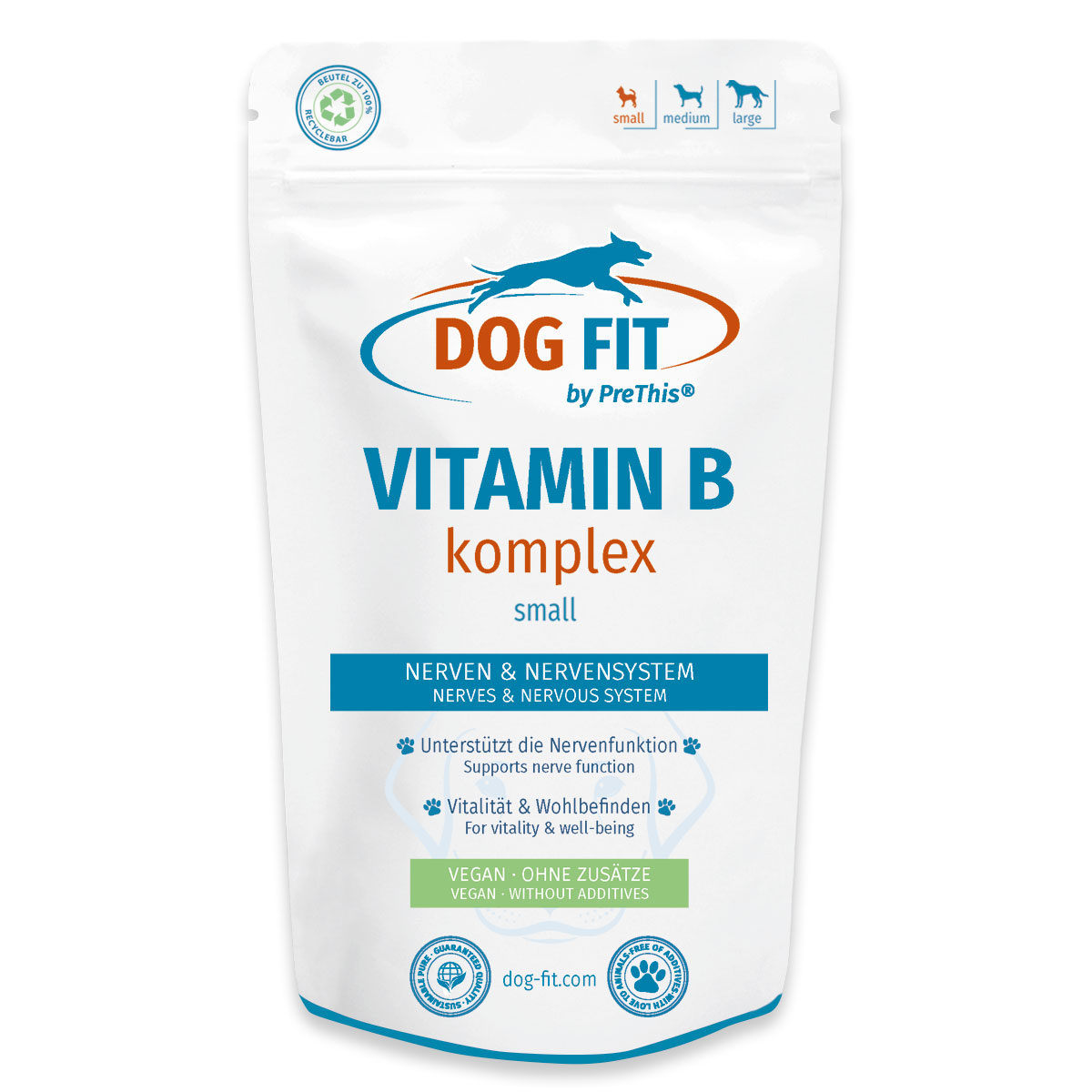
DOG FIT by PreThis® VITAMIN B. Complementary feed for dogs with all eight B vitamins: B1, B2, B3, B5, B6, biotin, folic acid and B12 as methylcobalamin. Vegan, free from artificial additives. To VITAMIN B in the shop
The content of the articles is for general information purposes only and does not replace diagnosis or treatment by a veterinarian. Reviews or testimonials are individual reports from verified customers. This information does not constitute medical advice and should not be understood as such.
Our daily inspiration comes from the special moments with our dogs. Here we share this enthusiasm and invite you to become part of the DOG FIT community on our social media channels.



Leave a Reply