


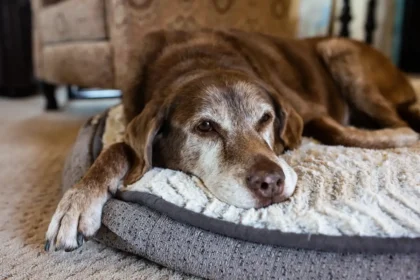
 Joints in older dogs need a little more attention in winter, because many seniors seem stiffer on cold days. Short but regular walks, a gentle start, non-slip floors and a soft bed make everyday life easier for your dog. It also pays to keep an eye on his weight. However, if the way your dog walks or gets up changes, he should see the vet.
Why do older dogs often seem stiffer in winter?
Why cold bothers some dogs is not fully understood. Veterinarian Rhiannon Koehler names three possible reasons on PetMD: in the cold, joint fluid could become thicker, and lower air pressure could make the tissue in the joint swell slightly. Above all, though, many dogs move less in winter, and little movement makes them stiff. However, not all experts agree that joint problems really increase in winter. So rather than simply blaming the weather, watch closely whether your dog changes.
How do you adapt exercise in winter?
- Short and daily: Daily short walks at a calm pace are more comfortable for many seniors than one long hike. What matters is that your dog keeps moving, because that keeps the body supple.
- Steady pace: Avoid sudden sprints and wild ball games, especially on slippery ground.
- The next day counts: If your dog is noticeably stiffer the next day, the walk was too long. Shorten it again and increase the duration only slowly, as a rule of thumb by no more than a fifth.
- Indoor exercise: On very cold or icy days, search games, food puzzles, familiar cues or small tricks provide variety without overtaxing your dog.
Warming up: how to start a walk gently
A short warm-up makes the start easier, because warmth loosens the muscles and improves blood flow. Mar Vista Animal Medical Center recommends warming the muscles with a warm cloth for about five minutes before exercise and massaging them gently. Test the temperature on your own skin first so the cloth isn’t too hot. You can also gently bend and stretch the legs, but only as far as is comfortable for your dog. Ideally, ask your vet to show you these movements once.
Then start calmly: walk for the first few minutes, and only then at the usual pace. At the end of the walk, let your dog go more slowly again for a few minutes so that he can cool down calmly.
Non-slip floors and small aids at home
- Rugs and mats: Tiles, laminate and wooden floors quickly become a slide for older dogs. Runners, rugs or non-slip mats give grip, especially at the front door, where wet snow comes in.
- Ramp instead of jumping: A ramp or a small step makes it easier to get onto the sofa, the bed or into the car.
- Bowls within reach: Place food and water so that your dog doesn’t have to climb stairs to reach them.
Where is the best place for your older dog to lie in winter?
Cold, hard floors are particularly hard on older dogs. The American Kennel Club points out that such surfaces can make joints and muscles even stiffer. So offer your dog a soft, well-padded bed in a warm place without draughts. If you live on several floors, a bed on each level is worthwhile so that your dog doesn’t constantly have to climb stairs or jump.
Why weight matters especially in winter
In winter many dogs move less, while there are often more treats around the holidays. A few extra grams quickly add up. Excess weight, however, puts additional strain on the joints. Whether your dog weighs too much is hard to judge by eye, though. So ask your vet about his ideal weight and weigh him regularly. Small, low-calorie treats are ideal for search and food games.
Paws and ice: safe on the move
- Hair between the toes: Trim the hair on the paws so that no ice balls form between the toes. They hurt when walking.
- Boots or balm: Dog boots protect the paws from salt and ice and give extra grip on slippery ground. Practise putting them on early. If your dog doesn’t like boots, a paw balm is an alternative.
- After the walk: Wipe the paws with lukewarm water or a damp cloth so that your dog doesn’t lick off any road salt.
- Coat: Short-haired and small dogs often need a coat on cold days. It keeps them warm and dry, especially in rain and snow, because a wet dog is a cold dog.
Joints in older dogs: when should you see the vet?
If the way your dog walks changes, if he gets up with more difficulty, limps, hesitates at steps or the walks keep getting shorter, have it checked by a vet. Such changes can have various causes. Whether this is the case and what is good for your dog now can only be judged by the vet after an examination. Never give your dog your own painkillers, because some human medicines such as ibuprofen are toxic to dogs.
In any case, regular check-ups make sense for seniors, after consultation even more than once a year. This way, changes in the joints in older dogs are noticed early.
Frequently asked questions
Is cold bad for dogs’ joints?
Many older dogs seem stiffer on cold days. Why is not fully understood, and not all experts see a clear connection. So watch whether your dog changes and ask your vet if needed.
How long should I walk an old dog in winter?
There is no fixed time. Daily short walks at a calm pace are better. If your dog is noticeably stiffer the next day, it was too much.
Does an old dog need a coat in winter?
That depends on the coat. Short-haired and small dogs often need a coat on cold days, especially when it’s wet.
Can I give my dog a painkiller for stiff joints?
No, not without your vet. Some human painkillers, such as ibuprofen, are toxic to dogs.
What helps an old dog on slippery floors?
Runners, rugs and non-slip mats give grip. A ramp makes it easier to get onto the sofa, the bed or into the car.
Sources
- Koehler R. (PetMD): Dog Arthritis and Cold Weather, 2023.
- Finlay K. (American Kennel Club): Ways to Care for an Old Dog, updated 2026.
- Weir M., Llera R., Downing R. (VCA Animal Hospitals): Arthritis in Dogs, updated 2026.
- VCA Animal Hospitals: Cold weather safety for your pets, accessed 2026.
- Mar Vista Animal Medical Center: Physical Therapy for Arthritic Patients, accessed 2026.
An older dog doesn’t have to give up lovely walks in winter. With a little more calm, warmth and grip, the cold season remains your time together.
Read more: Dog in winter: what does your dog good now · Healthy dog paws in winter
From our range
DOG FIT by PreThis® CARE senior. Complementary feed for older dogs with MSM, collagen, glucosamine, hyaluronic acid, green-lipped mussel, calcium, iron, zinc and vitamins A, D and E. In three sizes by body weight. To the shop


The content of the articles is for general information purposes only and does not replace diagnosis or treatment by a veterinarian. Reviews or testimonials are individual reports from verified customers. This information does not constitute medical advice and should not be understood as such.
Our daily inspiration comes from the special moments with our dogs. Here we share this enthusiasm and invite you to become part of the DOG FIT community on our social media channels.



Leave a Reply